
The Charleston Single House: Downtown
The Charleston Single House, the narrow, one-room-wide homes with side porches (piazzas) that define much of Downtown Charleston, comes with its own rulebook. Many of these homes sit inside the city’s historic district, where exterior color changes need approval from the Board of Architectural Review (BAR) before work begins. The BAR doesn’t work off a fixed list of approved colors, it reviews each submission case by case based on the home’s architectural style and the character of the surrounding block.
That’s part of why certain colors and traditions repeat throughout downtown. Charleston Green, the deep, almost-black green found on shutters, doors, and ironwork across the historic district, is probably the most famous example. Local legend traces it to the years after the Civil War, when the story goes that Charlestonians tinted federally supplied black paint with green pigment rather than paint the city in “Union black.” Historians offer a more practical explanation: many of Charleston’s original greens used an unstable pigment that darkened toward black over time, and the shade stuck around because it held up well and looked good against warm exterior tones. Either way, it’s now a defining part of the Single House palette, alongside soft porch-ceiling blues sometimes called Haint Blue, a tradition with roots in Gullah folklore.
Painting a downtown Single House well means respecting both the history and the practical side of the job. The BAR’s own guidelines note that a paint sample on the actual building may be required as part of approval, since a color can read very differently on paper than it does against Charleston’s light and humidity. That approval process moves faster when it’s planned for from the start rather than after a color choice gets rejected, so it’s worth building into your project timeline, not treating as a surprise delay.
There’s a practical side too. Any home built before 1978 is likely to have layers of lead-based paint somewhere in its history, a real consideration for many of Charleston’s oldest Single Houses, and it changes how prep and sanding need to be handled. Combine that with wood siding and trim that’s carried decades of coats, and careful surface prep becomes just as important to the final look as the color choice itself.
Coastal Cottages: Isle of Palms, Sullivan’s Island, and Folly Beach
Move out to the barrier islands, Isle of Palms, Sullivan’s Island, and Folly Beach, and the priorities shift from historic compliance to weather survival. These raised coastal cottages sit directly in salt air and near-constant humidity, a much harder environment on paint than a shaded downtown street.
Salt air accelerates coating breakdown, especially on the ocean-facing side of a home, and coastal humidity keeps surfaces damp longer after rain, which invites mildew if the wrong paint or finish gets used. It’s not just the paint, either: salt air is hard on exterior hardware and fasteners too, so a full exterior job on the islands often means checking and addressing more than just the siding itself. Many of these homes are also raised on pilings for flood protection, which adds trim, skirting, and understructure surfaces to the scope that a standard ground-level home wouldn’t have.
Homes out here generally do best with paint formulated for coastal exposure and mildew resistance, applied over properly prepped, fully dry surfaces, and coastal properties often need a fresh coat somewhat more often than inland homes given the constant exposure. Lighter, brighter color palettes are also the norm on the islands, both because they suit the beach cottage look and because lighter colors show less visible fading from constant sun exposure than darker shades do.
Established Suburban Homes: Mount Pleasant and James Island
Mount Pleasant and James Island represent a different category: a mix of older established neighborhoods and newer subdivisions, often on the same street. That mix means exterior materials vary block by block, older homes with wood siding sitting near newer construction with fiber cement siding, each aging differently and needing a different prep approach.
Established Lowcountry suburbs also tend to have more mature tree cover than newer developments, which sounds like a nice problem to have until you’re dealing with the shade and moisture retention that comes with it. Homes under heavy tree canopy hold onto humidity longer after rain, which is worth factoring into how often a home in these neighborhoods actually needs a repaint compared to one that sits in full sun. Some of these established homes are brick, which most homeowners leave unpainted, but brick homes with painted trim, shutters, and porches still need the same careful prep and mildew-resistant approach as a fully painted wood or fiber cement home.
Many established Mount Pleasant and James Island communities are also governed by an HOA, and HOA-approved color lists vary widely from one community to the next. It’s worth confirming your community’s guidelines before settling on a color, the same way a downtown homeowner would check with the BAR, so the color you fall in love with is one you’re actually allowed to use.
Newer Construction: West Ashley, Summerville, and North Charleston
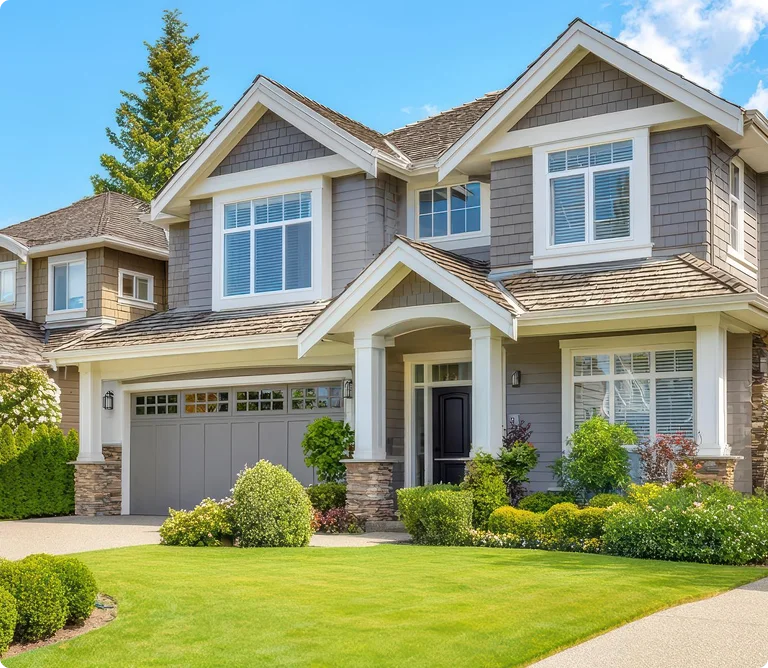
West Ashley, Summerville, and North Charleston have absorbed most of the area’s newer residential growth, and it shows in the building materials. Fiber cement siding, HardiePlank being the best-known brand, is the standard on most homes built in the last couple of decades in these areas, replacing the wood siding still common downtown and in older suburbs.
Fiber cement holds paint differently than wood. It’s more dimensionally stable (it doesn’t expand and contract with humidity the way wood does), which generally means a longer-lasting paint job when it’s properly prepped and painted with the right products. It also means factory-primed panels need to be handled correctly during a first repaint so the new coat actually bonds. Some newer homes in these areas use vinyl siding instead, which can also be painted, but it needs a paint specifically formulated to flex with vinyl’s expansion and contraction, since a rigid paint film will crack on a material that moves more than fiber cement or wood.
Color trends in these newer neighborhoods tend to run toward modern, coordinated exterior palettes, warm grays, greige tones, and black or dark bronze trim and accents, a noticeably different look from the historic palettes found closer to downtown. Newer construction homeowners also tend to update color more frequently than owners of historic homes do, since there’s no architectural review process standing between a homeowner and a fresh look, just the usual timing and prep considerations that apply to any repaint.
Choosing the Right Approach for Your Home’s Style
Whether your home is a 200-year-old Single House downtown or a newer build in Summerville, a good paint job starts with understanding what that specific home and location actually need, not a one-size-fits-all approach. That’s a different skill than just knowing how to apply paint well. It means recognizing when a home needs BAR-friendly historic colors and lead-aware prep versus when it needs mildew-resistant coastal coatings versus when it’s a straightforward fiber cement repaint with a modern palette, and adjusting the approach accordingly rather than treating every job the same.
Charleston Paint Masters has worked across the Charleston area, from historic downtown homes to island cottages to newer subdivisions, and Jason Bean is personally involved in every estimate to make sure the approach fits the home in front of him, not a generic template.
Request your free estimate or call (843) 224-0085 to talk through what your home’s style and location call for.
