
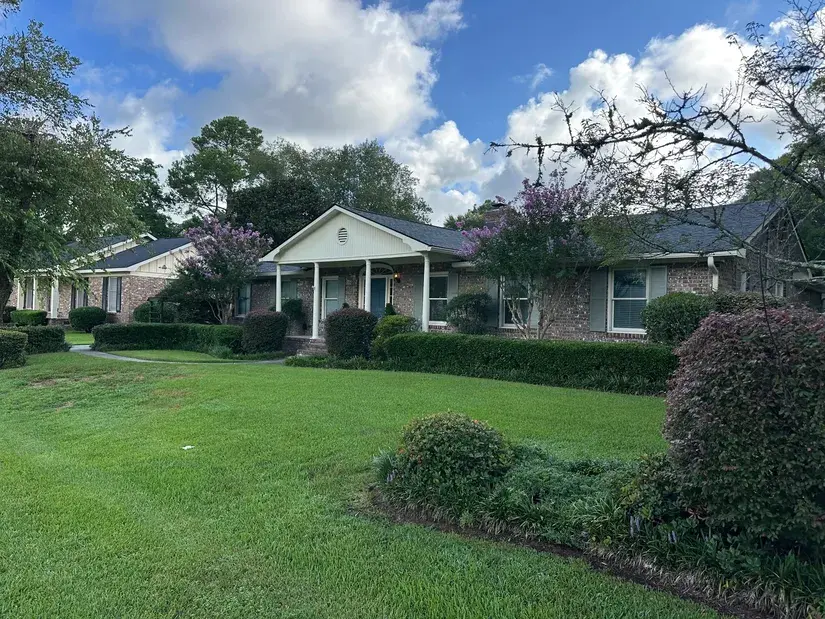
How the Painting Industry Actually Works, Behind the Scenes
Homeowners generally assume that when they hire “a painting company,” the people doing the work are employed by that company. In reality, this isn’t always the case. A significant portion of the residential and commercial painting industry operates on a subcontracting model: a company sells and manages the job, then brings in an independent crew, sometimes a crew they’ve worked with before, sometimes one assembled specifically for that job, to do the actual painting.
There’s nothing illegal about this model, and it’s genuinely common across construction and trade industries generally, not just painting. But it creates a few real, practical differences worth understanding before you hire anyone, regardless of which company you ultimately choose.
The Pay Structure Changes the Incentives
Subcontractors are frequently paid by the job rather than by the hour. On the surface, this sounds like it should be more efficient, and in some cases it is. But it also creates a straightforward economic incentive: finish faster, and you make more per hour actually worked. That’s not a criticism of any individual subcontractor’s character or work ethic. It’s simply how the economics of that arrangement tend to play out over time, and it can mean that prep work, detail work, and quality checks that don’t show up immediately, but matter enormously to how the job holds up over years, get compressed or skipped under time pressure.
Coverage Isn’t Always What Homeowners Assume
This is the part most homeowners genuinely don’t think to ask about, and it’s arguably the most important one: is the crew working on your property actually covered by workers’ compensation insurance while they’re there?
In a meaningful number of subcontracting arrangements across the trades, the answer is no. Workers get paid in cash, off the books, with no formal employment relationship and no real insurance coverage if someone gets injured while working at your home or business. Painting, as a trade, involves real physical risk: ladder and scaffolding work, working at heights, repetitive physical strain, and exposure to materials that require proper handling. It’s not a low-risk job, which is exactly why proper coverage matters so much.
If someone is injured on your property while working, and that person isn’t properly covered by workers’ compensation insurance, the liability question for the homeowner becomes genuinely murky and potentially costly, even though it wasn’t the homeowner’s arrangement that created the gap in coverage in the first place.
Accountability Gets Diffuse
When something isn’t done right on a project, and it happens with any contractor over enough jobs, having a direct, clear line back to the person actually responsible for the work matters enormously. A rotating cast of subcontracted crews, potentially different from job to job or even mid-project, makes that kind of direct accountability much harder to maintain than it needs to be.
How We Do It Differently
Every painter who works on your home or business is a trained employee of Charleston Paint Masters. We manage them directly, we’re responsible for their training and the quality of their work, and we carry appropriate coverage for our team while they’re on the job, full stop.
This is also a significant part of why we’ve deliberately kept our team at a manageable size rather than scaling up as quickly as possible. A smaller, directly-managed team means every project gets real, hands-on oversight, and it means the person who gave you your estimate has a genuine, ongoing stake in how the job actually turns out, not a name on an invoice several steps removed from the people holding the brushes and sprayers.
What This Looks Like in Practice
In concrete terms, employing our own crew rather than subcontracting means a few specific things carry through on every project, whether it’s interior work, full exterior painting, or a commercial project:
The same team starts and finishes your project. There’s no risk of a different, unfamiliar crew showing up partway through, having to re-learn the specifics of your job from scratch.
Quality control happens throughout, not just at a final walkthrough. Because our team is trained and managed directly, standards get maintained at every stage, not just checked at the end when problems are more expensive and disruptive to fix.
Issues get addressed directly. There’s no third-party subcontractor to work through, no game of telephone between you, us, and a separate crew. If something needs attention, we address it, directly and quickly.
You’re working with people who have a genuine, ongoing stake in the outcome. Our team’s reputation and livelihood are tied to Charleston Paint Masters specifically, not to a one-time job that ends the moment the final coat dries.
Why We Chose to Stay Smaller
At one point, our team grew to sixteen people. On paper, that sounds like a success story, and in some ways it was. But it also meant spending most of the time managing the business from an office rather than actually being present on job sites, doing estimates personally, and staying connected to the actual work.
That tradeoff didn’t sit right, so the team was deliberately scaled back down. Today, we run with a smaller crew, enough to take on a healthy volume of work, but small enough that every client can still interact directly with the person whose name is actually on the business. That’s not an accident or a limitation we’re working around. It’s a deliberate choice about what kind of company we wanted to run.
A Question Worth Asking Any Painting Contractor
Whoever you ultimately hire for a painting project, large or small, it’s worth asking directly: is this your own employed crew, or a subcontractor brought in for this job? And if it’s a subcontractor, are they genuinely covered by workers’ compensation insurance while working on your property?
These aren’t complicated questions, and a reputable company should be able to answer them clearly and directly without hesitation. How a company responds to that question, whether they answer plainly or get evasive, tells you a meaningful amount about how they actually operate day to day.
What to Look For Beyond This One Question
While the employee-versus-subcontractor distinction is an important one, it’s not the only thing worth verifying when choosing a painting contractor. A few other things worth confirming:
- General liability insurance, separate from workers’ compensation, which protects against property damage that might occur during a project
- Proper licensing, appropriate to your state and the scope of work involved
- Real references or a track record you can actually verify, not just a polished website
- A clear, written scope of work before any project begins, so there’s no ambiguity about what’s included
Asking about subcontracting practices is one strong signal among several, and it’s one that tends to correlate closely with how seriously a company takes quality control and accountability more broadly.
How to Verify a Contractor’s Coverage Before Hiring
Asking whether a company uses subcontractors is a good first question, but verifying insurance coverage directly is the more concrete step. A few practical ways to do this:
Ask for a certificate of insurance. A legitimate, properly insured contractor should be able to provide a certificate of insurance showing active workers’ compensation and general liability coverage without hesitation or delay.
Confirm coverage applies to whoever is actually on-site. In some cases, a company might carry insurance for its direct employees but not for subcontracted crews working under a separate arrangement. It’s worth asking specifically whether the coverage extends to everyone who will be physically present at your property.
Check with your state’s licensing board if applicable. Depending on the scope and value of a project, verifying a contractor’s license status through the appropriate state authority can add another layer of confidence beyond what the company tells you directly.
Don’t rely solely on a company’s website or verbal assurance. A polished website and confident answers are good signs, but a real certificate of insurance is the concrete documentation that actually protects you if something goes wrong.
What Homeowners Often Don’t Realize About Liability
If an uninsured worker is injured while working at a private residence, the property owner can, in some circumstances, face liability exposure, even though the arrangement that created the coverage gap wasn’t something the homeowner controlled or was even aware of. This is a genuinely underappreciated risk in how homeowners evaluate contractors, since the focus tends to land entirely on price and estimated timeline, with insurance and employment status treated as an afterthought, if it comes up at all.
This isn’t meant to suggest that every subcontracted arrangement is uninsured or risky. Many subcontractors are properly insured, licensed professionals running legitimate, well-run businesses. The point is simply that this status isn’t something to assume either way. It’s worth confirming directly, regardless of which company or arrangement you’re considering.
Questions Worth Asking During Any Painting Estimate
Beyond the subcontracting and insurance questions already covered, a few other questions tend to reveal a lot about how a company actually operates:
- How long has your team been working together? A stable, long-tenured team often reflects positively on how a company treats and retains its workers.
- What does your quality control process look like during a project, not just at the end? This reveals whether oversight happens continuously or only at a final walkthrough.
- Can you provide references from similar past projects? A company confident in its work should be glad to connect you with past clients.
- What happens if I’m not satisfied with part of the work? How a company answers this, clearly and specifically versus vaguely, says a lot about their actual process for handling issues.
The Bigger Picture: Why This Reflects Our Broader Approach
The decision to employ our own crew rather than subcontract isn’t an isolated policy. It reflects a broader philosophy about how we run the business: stay a size we can manage directly, maintain quality control throughout every project rather than just at the end, and make sure the people doing the work have a genuine, lasting stake in how it turns out. This same philosophy shows up in how we handle everything from initial estimates through project completion, on residential projects and commercial work alike, whether that’s a detailed drywall repair that requires careful attention to get right or a full exterior repaint that depends on the same crew seeing a project through from start to finish.
Frequently Asked Questions
Q: Is it illegal for a painting company to use subcontractors?
A: No, subcontracting is a legal and common business model across the construction and trades industry. The concern isn’t the legality of the arrangement itself, it’s whether workers are properly covered by insurance and whether quality control is maintained consistently.
Q: How can I tell if a contractor uses subcontractors or their own crew?
A: The most direct way is simply to ask. A company confident in its practices should answer clearly. You can also ask to see proof of workers’ compensation coverage for whoever will actually be on-site.
Q: Does using employees instead of subcontractors cost more?
A: Not necessarily. Pricing depends on many factors beyond staffing model, including project scope, materials, and overhead. The value of an employee-based model shows up more in consistency, accountability, and quality control than in a guaranteed price difference.
Q: What happens if a subcontractor gets injured on my property without proper coverage?
A: This can create real liability exposure for a property owner, since the standard protections that come with a properly insured employment relationship may not apply. It’s a genuine reason to ask this question upfront rather than after a project has already started.
Q: Do you ever use subcontractors for specialty work?
A: Our team handles the painting work itself directly. If a project reveals a need for genuinely separate specialty trades outside of painting, that would be discussed transparently as part of project planning, not handled without your knowledge.
Q: Should I be worried if a contractor says yes, they use subcontractors?
A: Not automatically. Plenty of legitimate, well-run companies use properly insured, vetted subcontractors. The key is verifying that coverage and quality control are genuinely in place, rather than assuming either way based on the business model alone.
Q: How do I know if the same crew will be on-site for the entire project?
A: This is worth asking directly during your estimate. A company employing its own team is generally better positioned to commit to crew consistency than one relying on subcontractors, whose availability can shift job to job.
What Happens When Subcontracting Arrangements Go Wrong
It’s worth walking through, in general terms, what can actually happen when the concerns raised earlier in this piece play out in practice, since it helps explain why they matter beyond an abstract policy discussion.
Scenario one: inconsistent quality across a project. A homeowner hires a company for a whole-home project. Different rooms or different sides of the exterior are handled by different subcontracted crews over the course of the job, each with their own habits and standards. The result is a finished project with noticeably inconsistent quality from one area to another, something a homeowner often doesn’t fully notice until well after the crews have moved on to other jobs.
Scenario two: an injury with no clear resolution. A worker is injured while on a ladder at a residential property. It later becomes unclear whether that worker was covered by any insurance, since they were part of an informally arranged subcontracted crew rather than a direct employee of the company the homeowner actually hired. The resulting situation, both for the injured worker and potentially for the homeowner, becomes far more complicated than it would have been with a properly insured, directly employed crew.
Scenario three: no one to hold accountable for a problem. A homeowner notices a quality issue weeks after a project wraps up. The original company points to the subcontractor, who is no longer easily reachable and was never under any long-term obligation to the homeowner in the first place. Getting the issue resolved becomes a frustrating, drawn-out process rather than a simple call to the same team that did the original work.
None of these scenarios are inevitable outcomes of subcontracting as a business model. Plenty of subcontracted arrangements are handled professionally and responsibly. But these are the specific, practical risks that an employee-based model is structurally designed to avoid, which is the core reason behind our own approach.
Working With a Team That’s Actually Accountable
When you hire Charleston Paint Masters, you’re hiring a company built and run by people with a direct, ongoing stake in how your project turns out, not a rotating crew assembled for a single job. That’s not a marketing line. It’s simply how the business has been structured from day one, and it’s a big part of why we’ve built the reputation we have across the Charleston area.
Want to talk to the people who’ll actually be doing the work? Request a free estimate today.